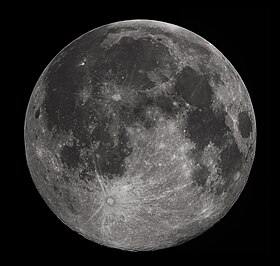
Since I love space and think space stuff is cool, I wanted to post something about the moon. I got this from "
Atlas of the World" by Reader's Digest.
"Unlike the earth - a dynamic planet where weather has eroded the shifting surface and erased the record of early history - the moon has hardly changed. Its main features have been fossilized in time. Its gravitational force - only a sixth of that of the earth - is not great enough to grasp or retain an atmosphere. As a result, there is no water, no weather, and no wind. Until recently three competing theories attempted to explain the origin of the moon, some 4.5 billion years ago. The "fission" theory claimed that the early earth was rotating so fast that a chunk of it broke away and was flung out into space to form the moon - leaving, it was even suggested, a scar on the earth's surface in the form of the Pacific Ocean. The "double planet" theory contended that the twin bodies of earth and moon formed independently from the same primordial cloud of dust and gas. And the "capture" theory proposed that the moon formed elsewhere in the solar system and was pulled into orbit by the earth's gravity as it flew past the earth. None of these theories, however, was confirmed by the Apollo missions of the late 1960's and early 1970's. The Apollo findings showed that the chemical compositions of the earth and moon are very different - that, for example, there is little or no iron, water, or sodium on the moon. These discoveries raised more questions than they answered."


No comments:
Post a Comment